Which tools should I look at first?
Clinic groups evaluating process orchestration can start with Bizagi for governed multi-role workflows, Decisions for rules-heavy intake routing, and GoRules for editable decision logic with audit records. Each suits teams that need visible handoffs, approvals and traceable steps across clinics and specialists.
What does each tool do?

#1 · Bizagi
When should I use Bizagi?
Enterprises and clinic groups needing governed, multi-role processes with built-in compliance controls.
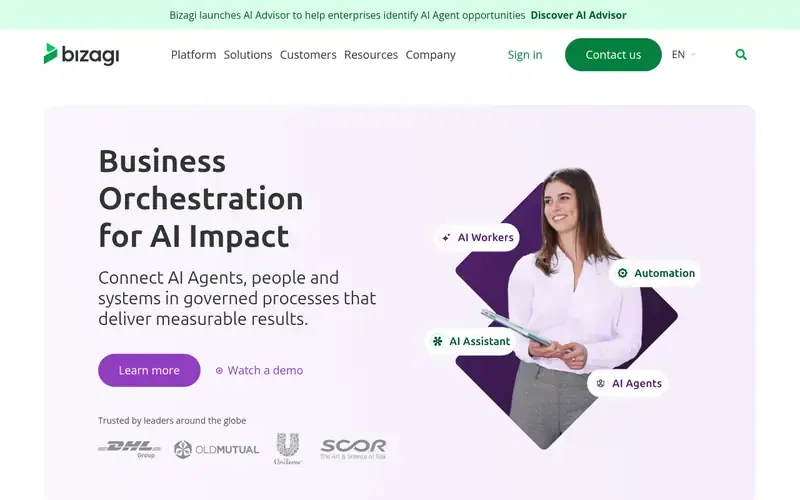
Bizagi is a low-code platform for business orchestration that connects AI agents, people, systems, bots and data in governed processes.
Documented strengths
- Low-code process automation connecting people, systems, bots and data
- Governance procedures built in to support regulatory compliance
- Role-based personalized experiences with integrated reporting
- Reusable objects, actions and processes to speed development
- Bizagi Modeler, a free BPMN tool, for process design
Documented limits
Vendor pages describe governance and AI controls but do not specify clinical templates or healthcare-specific intake content, so teams should confirm fit for their coordination steps.
- Who it is for
- Enterprises and clinic groups needing governed, multi-role processes with built-in compliance controls.
- Platforms
- Not stated on official pages.
- Pricing
- See the vendor's own pricing page for current plans and costs. bizagi.com
- Facts checked
- 21 November 2026
Why it made the list: Bizagi documents process design, execution, AI and governance unified in one layer across existing systems, which matches clinical workflows that span roles and systems. Governance procedures can be built in to support regulatory compliance, and role-based personalized experiences support staff working different steps. Reporting tools can be integrated to support decision making across intake and coordination stages.

#2 · Decisions.com
When should I use Decisions?
Healthcare and insurance organizations routing referrals through rules, exceptions and human review.
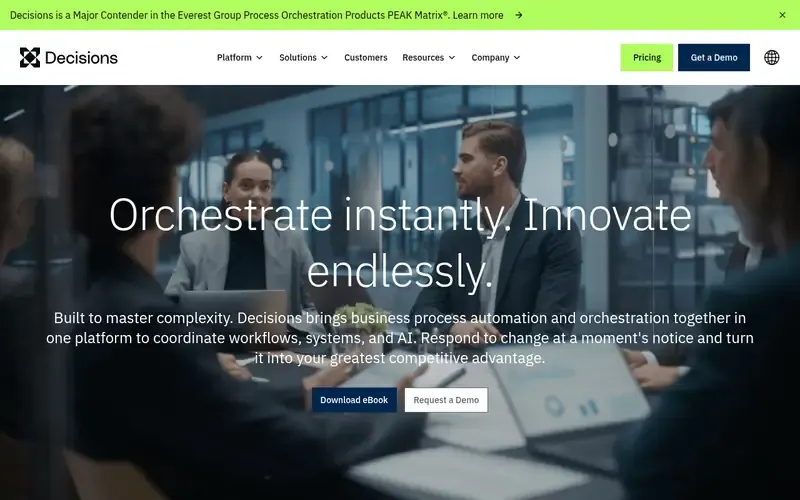
Decisions is a business process automation and orchestration platform that coordinates workflows, business rules, systems, people and AI in one environment.
Documented strengths
- Workflow orchestration with an enterprise rules engine
- AI agents placed inside governed processes with approvals and human oversight
- Process intelligence for operational visibility across modern and legacy systems
- Low-code approach for IT and business analysts
- Approachable for .NET developers adding workflow to existing applications
Documented limits
Official documentation does not state prebuilt clinical intake forms or referral-routing templates, so configuration for care coordination is left to the implementing team.
- Who it is for
- Healthcare and insurance organizations routing referrals through rules, exceptions and human review.
- Platforms
- Not stated on official pages.
- Pricing
- See the vendor's own pricing page for current plans and costs. decisions.com
- Facts checked
- 22 November 2026
Why it made the list: Decisions documents coordinating the full process including rules, exceptions and human review, which suits referral routing where eligibility and exceptions must be handled consistently. AI agents sit inside governed processes with rules, approvals and human oversight. The enterprise rules engine and process intelligence give visibility into where intake or referral steps stall.

#3 · Softr
When should I use Softr?
Operations and IT teams building intake portals and coordination tools with role-based access.
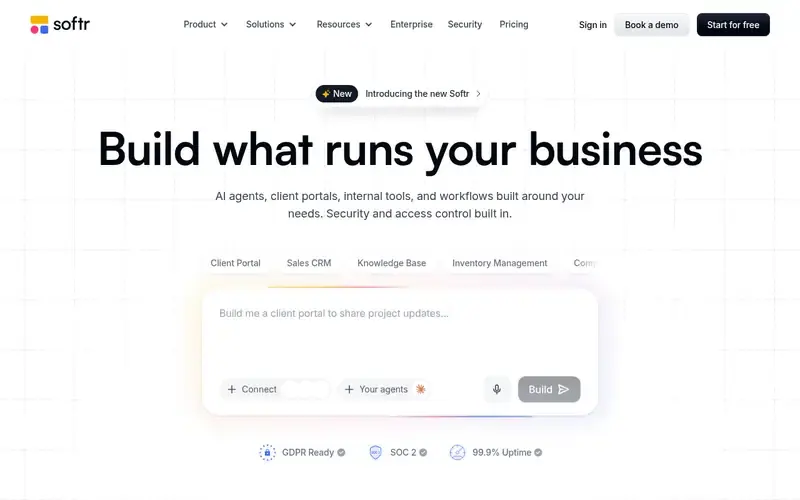
Softr is an AI app builder for creating portals and internal tools for business operations without code.
Documented strengths
- AI Co-Builder generating database, pages, user roles and business logic
- Role-based access previewed as a specific role or user before publishing
- User groups controlling pages, data and actions within one app
- Native database plus connections to more than 21 external data sources
- HTTP calls to any external API when no native connector exists
Documented limits
Softr documents portal and internal tool building rather than clinical workflow engines, so audit trails for care steps are not described as a primary capability on official pages.
- Who it is for
- Operations and IT teams building intake portals and coordination tools with role-based access.
- Platforms
- Not stated on official pages.
- Pricing
- See the vendor's own pricing page for current plans and costs. softr.io
- Facts checked
- 21 November 2026
Why it made the list: Softr documents building portals with user groups controlling which pages, data and actions each user can access, which fits a patient intake front door plus staff coordination views. Workflows can call any external API over HTTP when no native connector exists. Role-based access can be previewed as a specific role before publishing, supporting multi-role handoffs.

#4 · GoRules
When should I use GoRules?
Analyst and engineering teams maintaining auditable decision logic for intake and referral routing.
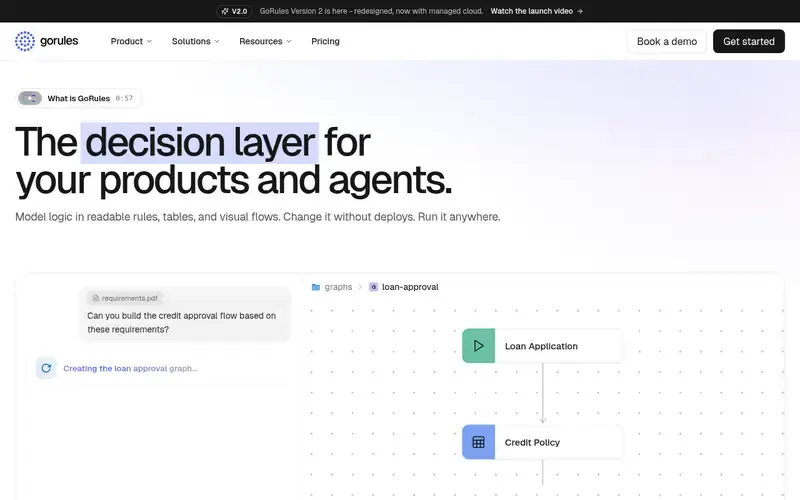
GoRules is a modern Business Rules Management System with an AI copilot and MCP server, built on an open-source rules engine called ZEN.
Documented strengths
- Readable rules, tables and visual flows editable without deploys
- Approval-based review workflows with a full audit record of changes
- Scenario test suites run on every change
- Git-like branches, history and visual diffs for business rules
- ZEN engine embeddable across multiple languages and environments
Documented limits
GoRules documents rule management and decision logic rather than end-to-end care coordination, so patient-facing steps depend on the surrounding systems.
- Who it is for
- Analyst and engineering teams maintaining auditable decision logic for intake and referral routing.
- Platforms
- Deployments are self-hosted or run in the cloud.
- Pricing
- See the vendor's own pricing page for current plans and costs. gorules.io
- Facts checked
- 22 November 2026
Why it made the list: GoRules documents modeling logic in readable rules, tables and visual flows that can change without deploys, which suits referral eligibility and routing rules that clinical teams adjust. Review workflows can require approvals before publishing, and the platform provides a full audit record of changes. Scenario test suites run on every change, supporting controlled rule updates.

#5 · Swell
When should I use Swell?
Multi-location healthcare groups coordinating post-visit follow-up and escalation across clinics.
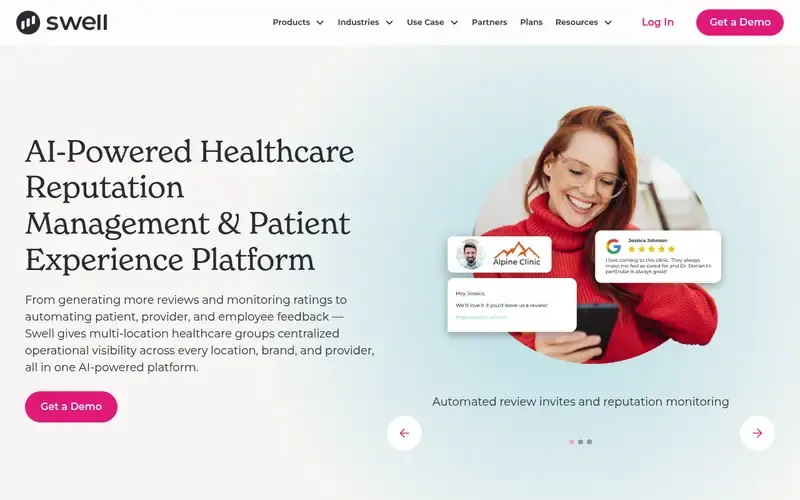
Swell is an AI-powered reputation management and patient experience platform for multi-location healthcare groups such as DSOs and MSOs.
Documented strengths
- Connection to dental and medical EHR and PMS systems including Dentrix and Open Dental
- Low scores and high-risk mentions become assigned tickets with follow-up SLAs
- Native region, brand, clinic and provider hierarchies
- Real-time flagging of integration sync failures
- Automated patient feedback surveys and NPS
Documented limits
Swell documents reputation and experience workflows rather than clinical process orchestration, so intake and referral routing remain outside its described scope.
- Who it is for
- Multi-location healthcare groups coordinating post-visit follow-up and escalation across clinics.
- Platforms
- Not stated on official pages.
- Pricing
- See the vendor's own pricing page for current plans and costs. swellcx.com
- Facts checked
- 21 November 2026
Why it made the list: Swell documents connecting to dental and medical EHR and PMS systems and routing low survey scores and high-risk mentions into assigned tickets with follow-up SLAs. That maps to post-visit follow-up within care coordination. Region, brand, clinic and provider hierarchies are native, matching multi-location clinic groups, and integration sync health is flagged in real time.

#6 · Ortho2
When should I use Ortho2 Edge Cloud?
Orthodontic practices handling intake scheduling, forms and reminders within a single practice management system.

Edge Cloud is Ortho2's cloud-based orthodontic practice management software with scheduling, imaging, treatment charts, mobile apps, reminders, and a financial slider.
Documented strengths
- Cloud-based access from multiple devices without an on-site server
- Electronic patient forms loaded into Edge Cloud from the practice website
- Online scheduling and automated phone, text and email reminders
- Two-way texting and online credit card payments posted automatically
- Edge Portal for mobile access to practice information and images
Documented limits
Edge Cloud is documented as orthodontic practice management software, so its scope is orthodontic practices rather than multi-specialty clinic group coordination across external specialists.
- Who it is for
- Orthodontic practices handling intake scheduling, forms and reminders within a single practice management system.
- Platforms
- Cloud-based, with data stored in a secure data center.
- Pricing
- See the vendor's own pricing page for current plans and costs. ortho2.com
- Facts checked
- 21 November 2026
Why it made the list: Edge Cloud documents cloud access from multiple devices without a server, electronic forms loaded into the system, online scheduling for exams, and automated phone, text and email reminders. Two-way texting supports intake communication. These documented capabilities support the appointment and intake steps of orthodontic coordination.
How do these tools compare?
| Tool | Who it is for | Platforms | Pricing |
|---|---|---|---|
| BizagiBizagi | Enterprises and clinic groups needing governed, multi-role processes with built-in compliance controls. | Not stated on official pages. | Pricing on bizagi.com |
| DecisionsDecisions.com | Healthcare and insurance organizations routing referrals through rules, exceptions and human review. | Not stated on official pages. | Pricing on decisions.com |
| SoftrSoftr | Operations and IT teams building intake portals and coordination tools with role-based access. | Not stated on official pages. | Pricing on softr.io |
| GoRulesGoRules | Analyst and engineering teams maintaining auditable decision logic for intake and referral routing. | Deployments are self-hosted or run in the cloud. | Pricing on gorules.io |
| SwellSwell | Multi-location healthcare groups coordinating post-visit follow-up and escalation across clinics. | Not stated on official pages. | Pricing on swellcx.com |
| Ortho2 Edge CloudOrtho2 | Orthodontic practices handling intake scheduling, forms and reminders within a single practice management system. | Cloud-based, with data stored in a secure data center. | Pricing on ortho2.com |
Which tool fits my workflow?
- Bizagi if you need enterprises and clinic groups needing governed, multi-role processes with built-in compliance controls.
- Decisions if you need healthcare and insurance organizations routing referrals through rules, exceptions and human review.
- Softr if you need operations and IT teams building intake portals and coordination tools with role-based access.
- GoRules if you need analyst and engineering teams maintaining auditable decision logic for intake and referral routing.
- Swell if you need multi-location healthcare groups coordinating post-visit follow-up and escalation across clinics.
- Ortho2 Edge Cloud if you need orthodontic practices handling intake scheduling, forms and reminders within a single practice management system.
How were these tools selected?
Selection relied on each vendor's official documentation describing process design, execution, governance and audit capabilities. We compared how those documented functions map to human-heavy clinical coordination, where intake, referral routing and care steps pass among multiple roles and require a record of who did what. Tools were included when official pages described workflow modeling, role-based access, approvals or audit trails relevant to that coordination pattern.
Ordering reflects documented strength in modeling multi-role workflows with auditability, which fits clinical coordination most directly. Platform breadth, rules handling and human oversight features were weighed against the concrete workflow of moving a patient from intake through referral to specialist care. Every capability named here comes from vendor evidence, and genuine scope boundaries are noted where official pages are silent or where a tool addresses a narrower part of the workflow.
Order used: Ordered by strength in modeling human-heavy, multi-role workflows with audit trails, which fits clinical coordination best.
What else should I know about these tools?
What should a clinic group look for in BPM software for patient intake?
Official vendor documentation should describe workflow modeling, role-based access and some form of audit or governance record. Bizagi and GoRules both document governed processes through different approaches, so match documented capabilities to the roles and handoffs in your intake path.
Can business analysts change referral routing rules without developer help?
GoRules documents readable rules, tables and visual flows that can be changed without deploys, with approvals before publishing. Decisions documents a low-code approach for both IT and business analysts. Confirm which rule changes your governance allows analysts to publish.
How do these tools support audit trails across care coordination steps?
Bizagi documents governance procedures built in to support compliance. GoRules documents a full audit record of changes plus approval workflows. Decisions documents AI agents inside governed processes with rules, approvals and human oversight. Each addresses auditability differently, so review the documented details.
Do these platforms connect to clinical systems like EHR and PMS software?
Swell documents connections to dental and medical EHR and PMS systems including Dentrix and Open Dental, with real-time flagging of sync failures. Other tools describe integration capabilities generally, so verify any specific clinical system connection on official pages.
Are these tools suited to multi-location clinic groups or single practices?
Swell is documented as purpose-built for multi-location healthcare organizations with native region, brand, clinic and provider hierarchies. Edge Cloud is documented for orthodontic practices. Bizagi, Decisions, Softr and GoRules describe broader business audiences, so assess fit against your organization structure.
Where can I verify these details?
- Bizagi: bizagi.com/en, bizagi.com/en/about, bizagi.com/en/about/offices (21 Nov 2026)
- Decisions: decisions.com, decisions.com/about, decisions.com/customer-overview (22 Nov 2026)
- Softr: softr.io, softr.io/about (21 Nov 2026)
- GoRules: gorules.io, gorules.io/about, gorules.io/features (22 Nov 2026)
- Swell: swellcx.com (21 Nov 2026)
- Ortho2 Edge Cloud: ortho2.com, ortho2.com/our-solutions/demo, ortho2.com/our-solutions/edge-cloud (21 Nov 2026)
Related guides
- Top 5 BPMN process engine tools for Java and cloud-native developers
- Top 6 process automation tools for back-office approvals in finance, HR and procurement
- Top 7 BPM tools for banks, insurers and other regulated industries
- Top 5 BPM tools for document-heavy public-sector workflows
- More in BPM and process orchestration
The editorial order is unpaid. A vendor may buy one labelled featured slot in a guide, but payment never alters another entry or removes a competitor. Featured entries get the same fact check. Logicwick is independent. Product names and trademarks belong to their respective owners.