The shortlist
If your sales or relationship data does not fit standard leads and deals, start with Attio, Twenty and Creatio, which document customizable or extensible CRM foundations. EspoCRM and SuiteCRM add open source options with configurable fields and entities. This shortlist is for teams with unusual sales or relationship data who want to model it directly in the CRM.
Tool details

#1 · Attio
Attio
Revenue teams that want a customizable CRM extended through code and AI tools
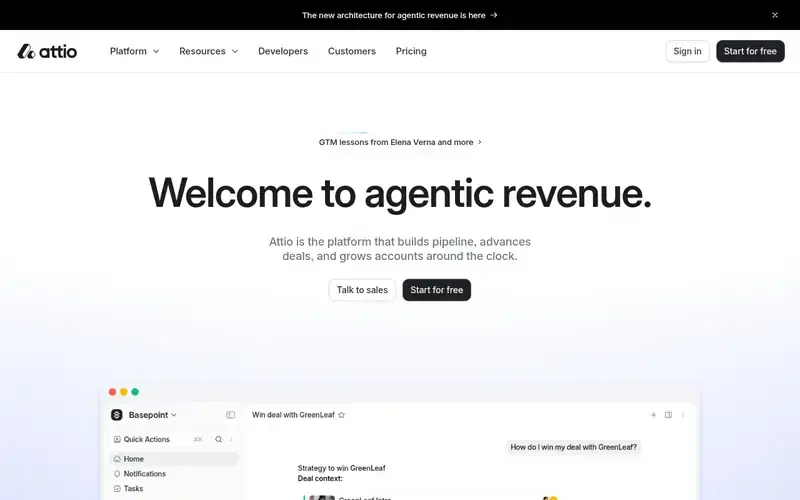
Attio is a CRM platform for revenue teams that builds pipeline, advances deals and grows accounts with agents and automation. It began in London with a customizable-CRM philosophy.
Documented strengths
- Pipeline built around how the team sells
- Structured and unstructured data held in one system
- SDK, API and MCP for building on the platform
- Integrations with tools such as Claude, Slack, Clay, Linear and Notion
- Ask Attio answers sourced from CRM records and respecting user permissions
Documented limits
The pages used do not detail how custom objects or relationships are configured, so teams with complex models should check the vendor documentation.
- Who it is for
- Revenue teams that want a customizable CRM extended through code and AI tools
- Platforms
- Not stated on official pages
- Pricing
- See the vendor's own pricing page for current plans and costs. attio.com
- Facts checked
- 21 November 2026
Why it made the list: It sits first because the vendor stresses a customizable CRM that builds itself around the business, holds structured and unstructured data together and extends through an SDK, API and MCP.

#2 · Twenty
Twenty
Technical teams that want to build and self-host a custom CRM
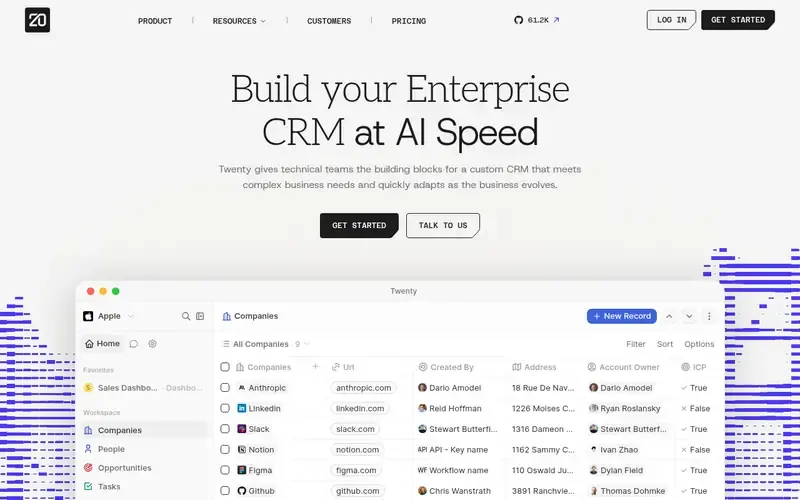
Twenty is an open-source, modular CRM that gives technical teams building blocks to build and adapt a custom CRM.
Documented strengths
- Open-source software with a developer experience like normal software
- One extensibility toolkit for data model, layout and automation
- AI that can scaffold custom objects and actions from a prompt
- Self-hosting available
- Notion-like interface with real-time data and a built-in AI chat assistant
Documented limits
The page is aimed at technical and development teams, so teams without engineering support should check the vendor documentation for how much setup is expected.
- Who it is for
- Technical teams that want to build and self-host a custom CRM
- Platforms
- Self-hosted, per the vendor; other platforms not stated on official pages
- Pricing
- See the vendor's own pricing page for current plans and costs. twenty.com
- Facts checked
- 21 November 2026
Why it made the list: It follows because a single extensibility toolkit covers data model, layout and automation, and AI can scaffold custom objects and actions from a prompt.

#3 · Creatio
Creatio
Teams that want to build custom applications and workflows around their CRM data
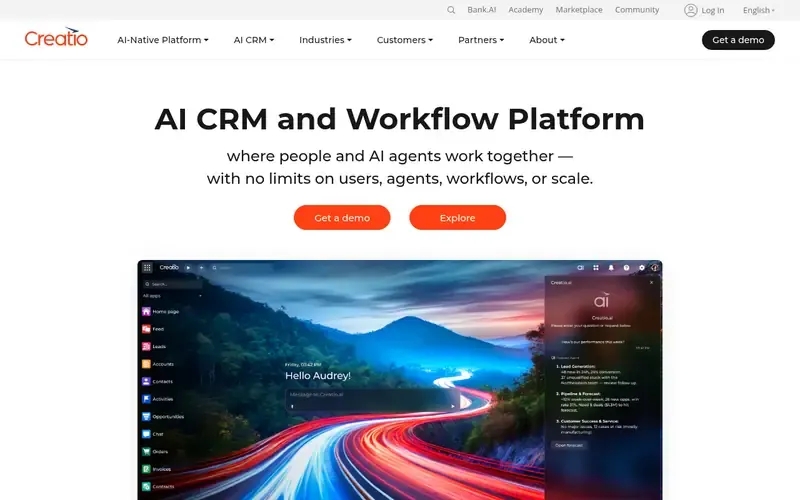
Creatio is an AI CRM and workflow platform for marketing, sales and service where people and AI agents work together.
Documented strengths
- No limits advertised on users, custom agents, applications, workflows, custom objects and API calls
- Business Studio with AI coding agents and no-code visual designers
- Human-led and agentic workflows
- AI Studio for the enterprise agent lifecycle
- Industry workflows for 20 verticals, including banking, insurance and manufacturing
Documented limits
The page emphasizes AI agents and workflows over data-modeling detail, so teams that need specific relationship structures should check the vendor documentation.
- Who it is for
- Teams that want to build custom applications and workflows around their CRM data
- Platforms
- Not stated on official pages
- Pricing
- See the vendor's own pricing page for current plans and costs. creatio.com
- Facts checked
- 21 November 2026
Why it made the list: It sits third because the vendor advertises no limits on custom objects and offers Business Studio for building applications with no-code visual designers.

#4 · EspoCRM
EspoCRM
Teams that want configurable entities and relationships in an open source CRM
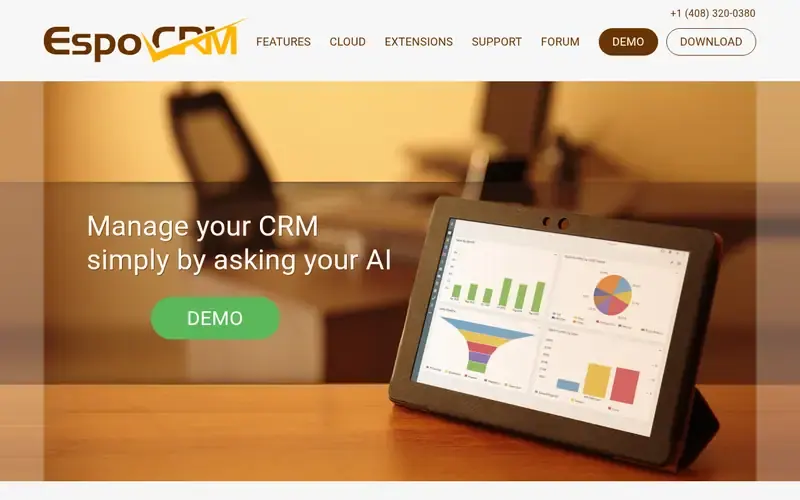
EspoCRM is open source CRM software for managing contacts, sales, support and marketing, with an open API and customizable workflows.
Documented strengths
- Entity manager for custom entities, fields and relationships
- Formula scripting to calculate fields or perform actions
- Business process management to visualize and automate processes
- Open API and customizable workflows
- Roles that define access permissions for users and teams
Documented limits
The pages used describe the entity manager briefly, so teams with large or highly interlinked models should check the vendor documentation.
- Who it is for
- Teams that want configurable entities and relationships in an open source CRM
- Platforms
- Web application; cloud-hosted and on-premise
- Pricing
- See the vendor's own pricing page for current plans and costs. espocrm.com
- Facts checked
- 21 November 2026
Why it made the list: It is placed fourth because its entity manager is documented as creating custom entities, fields and relationships, alongside formula scripting and role-based access.

#5 · SalesAgility
SuiteCRM
Teams that want an open source CRM adapted through admin settings and an open REST API
SuiteCRM is an open-source CRM from SalesAgility that unifies sales, marketing and service teams, with lead, opportunity, quotation and reporting tools.
Documented strengths
- Customizable layouts and fields
- System admin tools that allow customization without development
- Open REST API for integration with core business systems
- Condition-based automation for repetitive admin work
- Self-hosted or managed hosting
Documented limits
The pages used do not mention custom objects or custom relationships by name, so teams that need them should check the vendor documentation.
- Who it is for
- Teams that want an open source CRM adapted through admin settings and an open REST API
- Platforms
- Self-hosted or managed hosting
- Pricing
- See the vendor's own pricing page for current plans and costs. suitecrm.com
- Facts checked
- 21 November 2026
Why it made the list: It closes the list because it documents customizable layouts and fields and admin tools that customize without development, but does not name custom objects.
Side-by-side comparison
| Tool | Who it is for | Platforms | Pricing |
|---|---|---|---|
| AttioAttio | Revenue teams that want a customizable CRM extended through code and AI tools | Not stated on official pages | Pricing on attio.com |
| TwentyTwenty | Technical teams that want to build and self-host a custom CRM | Self-hosted, per the vendor; other platforms not stated on official pages | Pricing on twenty.com |
| CreatioCreatio | Teams that want to build custom applications and workflows around their CRM data | Not stated on official pages | Pricing on creatio.com |
| EspoCRMEspoCRM | Teams that want configurable entities and relationships in an open source CRM | Web application; cloud-hosted and on-premise | Pricing on espocrm.com |
| SuiteCRMSalesAgility | Teams that want an open source CRM adapted through admin settings and an open REST API | Self-hosted or managed hosting | Pricing on suitecrm.com |
Choose by need
- Attio if you need revenue teams that want a customizable CRM extended through code and AI tools.
- Twenty if you need technical teams that want to build and self-host a custom CRM.
- Creatio if you need teams that want to build custom applications and workflows around their CRM data.
- EspoCRM if you need teams that want configurable entities and relationships in an open source CRM.
- SuiteCRM if you need teams that want an open source CRM adapted through admin settings and an open REST API.
How this guide was built
We looked at how well each CRM fits custom objects and flexible data models, which capabilities the vendor documents for customization and extension, and what the vendor says about deployment, such as self-hosting, cloud and APIs. All facts come from official vendor pages, and we record the date each page was checked. Where a page does not describe something, we say so instead of assuming it.
The order reflects editorial fit for this use case, and each entry explains its position in words. Tools whose documentation points most directly to a customizable data model and easy extension come first. Tools that describe configurable fields and layouts more generally follow. The list is built from documentation, not product trials, so confirm the details on your own data model before you commit. Pricing is on each vendor's own page. We dropped Salesforce Sales Cloud because its official page describes sales workflows, agents and revenue tools but does not describe custom objects or data-model flexibility.
Order used: Ordered by flexibility of the underlying data model and ease of customization.
Common questions
Which CRM on this list can create custom objects?
Creatio advertises no limits on custom objects, and Twenty says AI can scaffold custom objects and actions from a prompt. EspoCRM's entity manager creates custom entities, fields and relationships.
Which of these CRMs can be self-hosted?
Twenty can be self-hosted and is open source. SuiteCRM can be self-hosted or run on managed hosting, and EspoCRM offers cloud-hosted and on-premise options.
Which CRMs offer an API or SDK for extending the data model?
Attio offers an SDK, API and MCP, and EspoCRM supports an open API. SuiteCRM provides an open REST API, and Creatio advertises no limits on API calls.
Do any of these CRMs support building custom applications without code?
Creatio's Business Studio lets users build applications with AI coding agents and no-code visual designers. SuiteCRM's system admin tools allow customization without development.
Is there an open source CRM with formula fields?
EspoCRM documents formula scripting that calculates fields or performs actions. Twenty and SuiteCRM are also open source, but the pages used do not mention formula fields for them.
Sources
- Attio: attio.com, attio.com/about, attio.com/platform/ask (21 Nov 2026)
- Twenty: twenty.com, twenty.com/product (21 Nov 2026)
- Creatio: creatio.com, creatio.com/company/about, creatio.com/crm/what-is-crm (21 Nov 2026)
- EspoCRM: espocrm.com, espocrm.com/about-us, espocrm.com/features (21 Nov 2026)
- SuiteCRM: suitecrm.com, suitecrm.com/security-policy, suitecrm.com/what-is-suitecrm (21 Nov 2026)
Related guides
The editorial order is unpaid. A vendor may buy one labelled featured slot in a guide, but payment never alters another entry or removes a competitor. Featured entries get the same fact check. Logicwick is independent. Product names and trademarks belong to their respective owners.