The shortlist
If your monorepo's test suite has outgrown a single serial pipeline, start with Buildkite, GitHub Actions and GitLab CI/CD. Each documents ways to split work, run it in parallel or limit what runs. This shortlist is for engineering teams with large monorepos who want to keep feedback loops short, and it also covers CircleCI, Semaphore and Dagger.
Tool details

#1 · Buildkite
Buildkite
Platform teams that want to control the build fleet themselves

Buildkite is a CI orchestration platform with a cloud control plane and agents that run on customer infrastructure. Pipelines support dynamic steps, conditional logic, and wait, block and trigger steps.
Documented strengths
- Test splitting, performance insights and flaky test isolation
- Dynamic pipeline steps with conditional logic
- Test analytics across unit, integration and end-to-end tests
- Hosted or self-hosted agents
- Isolation through containers, VMs or ephemeral agents
Documented limits
The facts describe test splitting and dynamic steps, but not a specific change-detection feature for monorepos. Teams that need that should check the vendor documentation.
- Who it is for
- Platform teams that want to control the build fleet themselves
- Platforms
- Cloud control plane hosted on Amazon Web Services; hosted agents or agents on customer infrastructure
- Pricing
- See the vendor's own pricing page for current plans and costs. buildkite.com
- Facts checked
- 21 November 2026
Why it made the list: It sits first because its documented features, test splitting, dynamic steps and conditional logic, map directly onto splitting and shaping work in a large monorepo.

#2 · GitHub
GitHub Actions
Teams whose monorepo already lives on GitHub
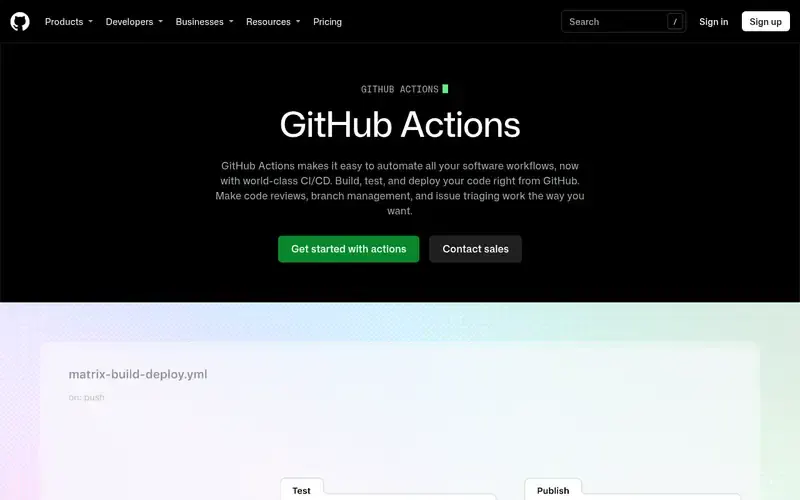
GitHub Actions is GitHub's workflow automation and CI/CD feature for building, testing and deploying code directly from GitHub. Workflows can be triggered by any GitHub event.
Documented strengths
- Matrix workflows that run in parallel
- Hosted environments for multiple operating systems, ARM, GPU and containers
- Self-run runners in the cloud or on-premises
- Workflow results usable as required checks before merge
- Marketplace of actions and shared preconfigured workflows
Documented limits
Documented parallelism centres on matrix workflows. Teams that need documented caching or selective test selection for a monorepo should check the vendor documentation.
- Who it is for
- Teams whose monorepo already lives on GitHub
- Platforms
- GitHub-hosted runners for several operating systems, plus self-run runners in the cloud or on-premises
- Pricing
- See the vendor's own pricing page for current plans and costs. github.com
- Facts checked
- 21 November 2026
Why it made the list: It comes second because matrix workflows run tests across several operating systems and runtime versions at the same time, and it needs no separate CI system for teams already on GitHub.

#3 · GitLab
GitLab CI/CD
Teams that want pipeline structure and governance in one platform
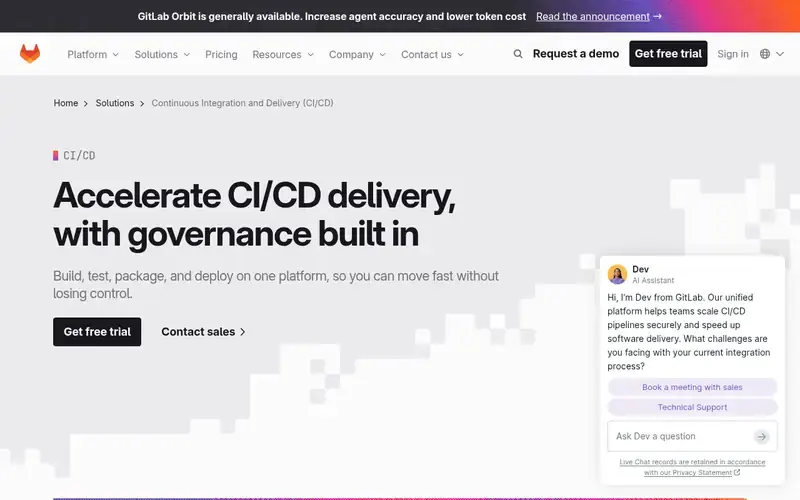
GitLab CI/CD builds, tests, packages and deploys software on one platform with built-in governance. It organises large pipelines through reusable components and child pipelines.
Documented strengths
- Child pipelines with DAG execution
- CI/CD Catalog of versioned reusable pipeline components
- Merge trains to stop conflicting merges breaking the main branch
- Cross-project pipelines that catch breaking changes across projects
- Hosted runners
Documented limits
The facts focus on pipeline structure and governance, not on caching or test-level splitting. Teams that need those should check the vendor documentation.
- Who it is for
- Teams that want pipeline structure and governance in one platform
- Platforms
- GitLab.com SaaS, GitLab Dedicated, and self-managed on any cloud or on premises, including air-gapped
- Pricing
- See the vendor's own pricing page for current plans and costs. about.gitlab.com
- Facts checked
- 21 November 2026
Why it made the list: It is placed third because child pipelines with DAG execution and cross-project pipelines address splitting and coordinating a big pipeline, and merge trains help protect the main branch.

#4 · CircleCI
CircleCI
Teams that want to cut feedback time by running only relevant tests
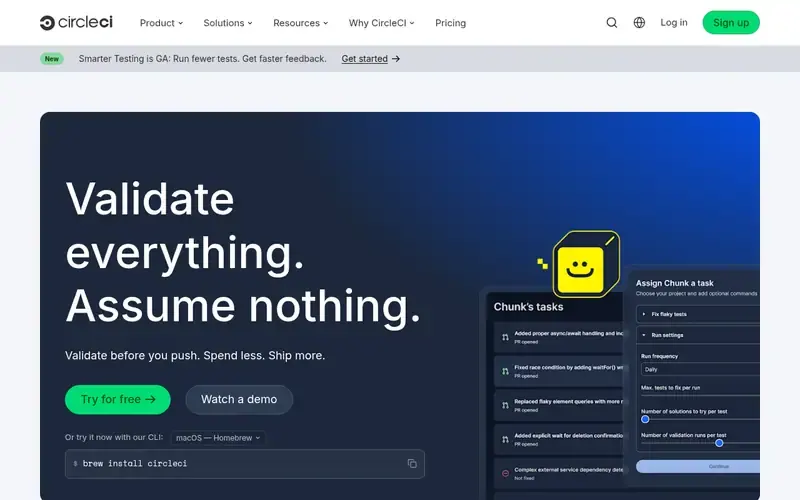
CircleCI is a CI/CD platform that helps teams validate, test and ship code changes with automation. It integrates with GitHub, GitLab, Bitbucket, AWS, GCP and Kubernetes.
Documented strengths
- Smarter Testing that runs only relevant tests
- Autoscaling and build images
- Chunk agent for maintenance work such as flaky tests
- Cloud-hosted, self-hosted runner or fully self-run options
- Job-level OpenID Connect authentication
Documented limits
The facts describe selective testing, but not how it behaves in very large monorepos. Teams with that need should check the vendor documentation.
- Who it is for
- Teams that want to cut feedback time by running only relevant tests
- Platforms
- Cloud-hosted, self-hosted runners, or a fully self-run instance
- Pricing
- See the vendor's own pricing page for current plans and costs. circleci.com
- Facts checked
- 21 November 2026
Why it made the list: It sits fourth because Smarter Testing, which runs only relevant tests, speaks directly to selective execution, and autoscaling supports parallel load.

#5 · Semaphore
Semaphore
Teams that want monorepo change detection with a choice of cloud or self-hosting
semaphoreci.comSemaphore is a CI/CD platform available as Cloud, Community Edition and Enterprise Edition. Jobs are organised into blocks and pipelines.
Documented strengths
- Change detection for monorepo workflows
- Caching and a container registry
- Dashboards for CI performance and reliability
- Test reports that show errors and flaky tests in one place
- API and CLI for custom integrations
Documented limits
Documented for GitHub and Bitbucket repositories. Teams on other source hosts should check the vendor documentation.
- Who it is for
- Teams that want monorepo change detection with a choice of cloud or self-hosting
- Platforms
- Semaphore Cloud, Community Edition for self-hosting, Enterprise Edition behind a firewall, and self-hosted agents
- Pricing
- See the vendor's own pricing page for current plans and costs. semaphoreci.com
- Facts checked
- 21 November 2026
Why it made the list: It is fifth because change detection and caching are both documented as speeding up workflows, including monorepo workflows, though the facts say less about large-scale parallelism than the entries above.

#6 · Dagger
Dagger
Teams that want pipelines that run the same locally and in CI
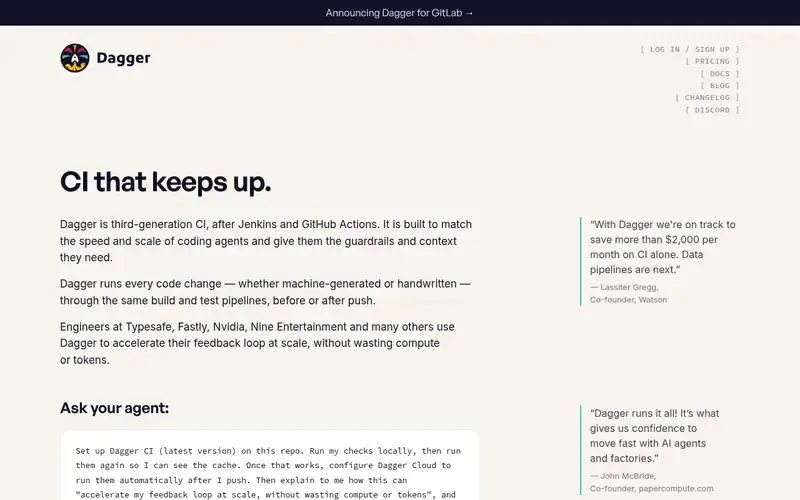
Dagger is a CI platform that runs every code change, machine-generated or handwritten, through the same build and test pipelines. Artifacts are computed lazily as an incremental DAG of sandboxed functions.
Documented strengths
- Incremental DAG of sandboxed functions, run locally or on a shared remote engine
- Integrated build cache and tracing
- Results reported per individual test
- Reusable modules that can be written in many languages
- Shell access to the exact state where a command failed
Documented limits
Dagger replaces proprietary pipeline config with modules, so teams should plan for that change. The facts do not describe monorepo-specific change detection.
- Who it is for
- Teams that want pipelines that run the same locally and in CI
- Platforms
- Open-source engine on a local machine or your own server; remote engines on your own infrastructure or Dagger Cloud
- Pricing
- See the vendor's own pricing page for current plans and costs. dagger.io
- Facts checked
- 21 November 2026
Why it made the list: It closes the list because its incremental DAG and integrated build cache suit large builds, but it is a different model from the YAML-pipeline tools above and adopting it means writing modules.
Side-by-side comparison
| Tool | Who it is for | Platforms | Pricing |
|---|---|---|---|
| BuildkiteBuildkite | Platform teams that want to control the build fleet themselves | Cloud control plane hosted on Amazon Web Services; hosted agents or agents on customer infrastructure | Pricing on buildkite.com |
| GitHub ActionsGitHub | Teams whose monorepo already lives on GitHub | GitHub-hosted runners for several operating systems, plus self-run runners in the cloud or on-premises | Pricing on github.com |
| GitLab CI/CDGitLab | Teams that want pipeline structure and governance in one platform | GitLab.com SaaS, GitLab Dedicated, and self-managed on any cloud or on premises, including air-gapped | Pricing on about.gitlab.com |
| CircleCICircleCI | Teams that want to cut feedback time by running only relevant tests | Cloud-hosted, self-hosted runners, or a fully self-run instance | Pricing on circleci.com |
| SemaphoreSemaphore | Teams that want monorepo change detection with a choice of cloud or self-hosting | Semaphore Cloud, Community Edition for self-hosting, Enterprise Edition behind a firewall, and self-hosted agents | Pricing on semaphoreci.com |
| DaggerDagger | Teams that want pipelines that run the same locally and in CI | Open-source engine on a local machine or your own server; remote engines on your own infrastructure or Dagger Cloud | Pricing on dagger.io |
Choose by need
- Buildkite if you need platform teams that want to control the build fleet themselves.
- GitHub Actions if you need teams whose monorepo already lives on GitHub.
- GitLab CI/CD if you need teams that want pipeline structure and governance in one platform.
- CircleCI if you need teams that want to cut feedback time by running only relevant tests.
- Semaphore if you need teams that want monorepo change detection with a choice of cloud or self-hosting.
- Dagger if you need teams that want pipelines that run the same locally and in CI.
How this guide was built
We looked at how well each tool's documented capabilities fit the problem of keeping builds fast in a large monorepo. The main criteria were parallelism, caching and selective pipelines, meaning ways to run only the work a change needs. We also checked the documented deployment and platform options, such as hosted or self-managed runners and agents, because large repositories often need control over build infrastructure.
All facts come from official vendor pages, and each page has a check date recorded. The order reflects editorial fit for this specific use case, and we explain the reasoning in each entry. It does not say any tool is better overall. The list is built from documentation, not product trials, so teams should confirm details against vendor documentation before committing.
Order used: Ordered by support for parallelism, caching and selective pipelines at monorepo scale.
Common questions
Which CI tools support test splitting for large test suites?
Buildkite documents test splitting along with performance insights and flaky test isolation. CircleCI documents Smarter Testing, which runs only relevant tests, and GitHub Actions documents matrix workflows that run in parallel.
Do any of these tools have monorepo-specific features?
Semaphore documents change detection that speeds up monorepo workflows. GitLab CI/CD documents child pipelines with DAG execution and cross-project pipelines, and Dagger documents an incremental DAG with a build cache.
Can I run builds on my own infrastructure?
Yes, for all six. Buildkite agents run on customer infrastructure, GitHub Actions supports self-run runners, and GitLab, CircleCI and Semaphore document self-managed or self-hosted options. The Dagger Engine runs on a local machine or your own server.
How is Dagger different from the other tools?
Dagger describes itself as third-generation CI. Its modules read native configuration instead of proprietary YAML, and its pipelines can run locally or on a shared remote engine.
How do I keep a flaky test from slowing the whole pipeline?
Buildkite documents flaky test isolation, CircleCI documents a Chunk agent that handles flaky tests, and Semaphore shows flaky tests in its test reports. Check each vendor's documentation for how it works in your setup.
Sources
- Buildkite: buildkite.com/home, buildkite.com/about/company, buildkite.com/about/security (21 Nov 2026)
- GitHub Actions: github.com/features/actions, github.com/about, github.com/features (21 Nov 2026)
- GitLab CI/CD: about.gitlab.com/solutions/continuous-integration, about.gitlab.com/platform, about.gitlab.com/security (21 Nov 2026)
- CircleCI: circleci.com, circleci.com/about, circleci.com/product (21 Nov 2026)
- Semaphore: docs.semaphore.io, docs.semaphore.io/getting-started/about-semaphore, support.semaphore.io (21 Nov 2026)
- Dagger: dagger.io (21 Nov 2026)
Related guides
The editorial order is unpaid. A vendor may buy one labelled featured slot in a guide, but payment never alters another entry or removes a competitor. Featured entries get the same fact check. Logicwick is independent. Product names and trademarks belong to their respective owners.